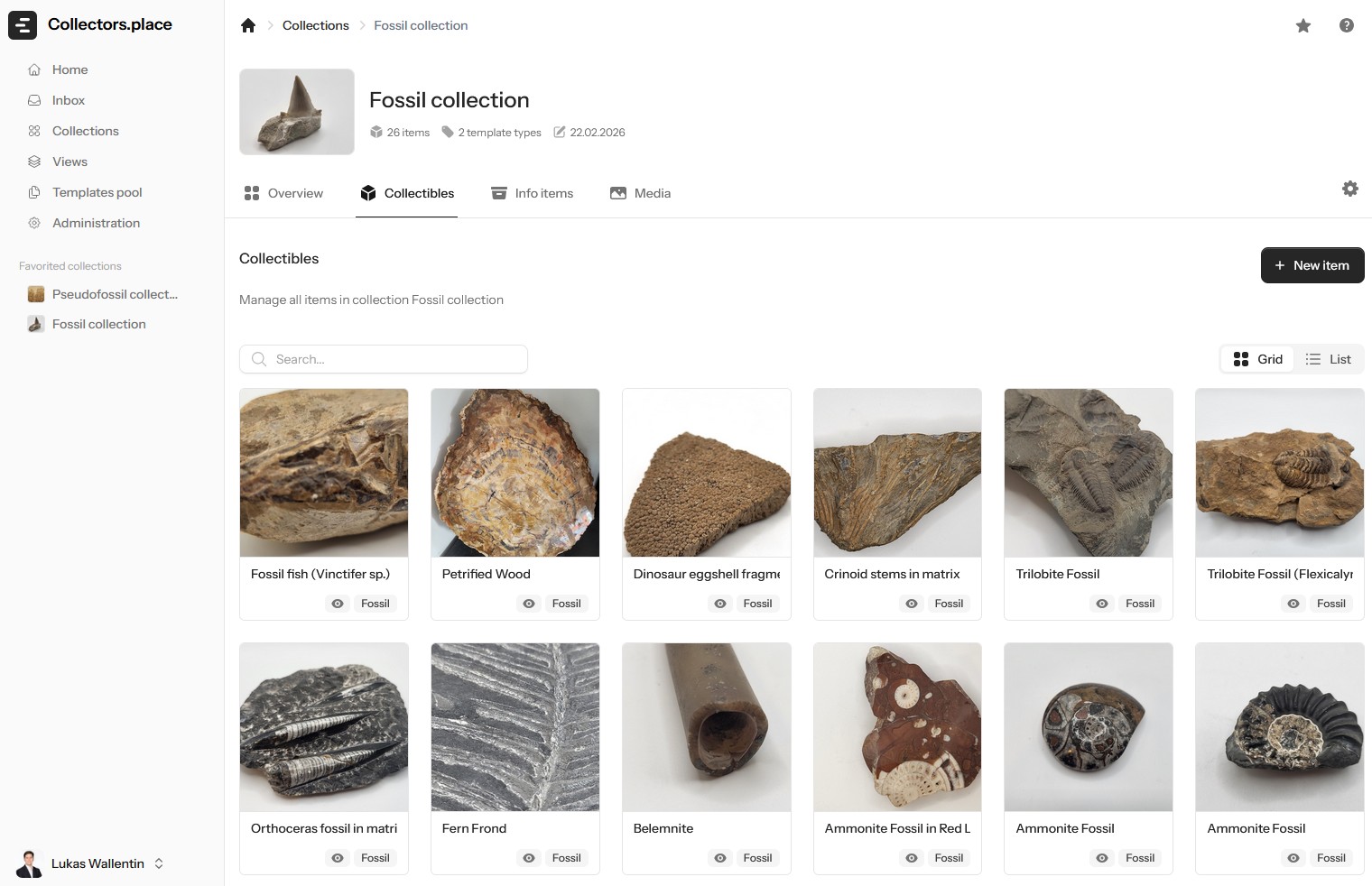
Why to Manage and Catalog Your Fossil Collection?
Collecting fossils means preserving a piece of Earth's history. However, without structured documentation, important information can easily be lost — such as discovery locations, geological age, or scientific classification.
With Collectors.place, fossil collectors can digitally catalog their finds, record scientific data, and organize their collection for the long term.
Whether you own a few unique specimens or manage a large collection, digital documentation helps preserve the value and story of every fossil.
Why Fossils Should Be Documented
A fossil is more than just an attractive collectible. Important information includes:
- scientific classification
- geological age
- discovery location
- physical characteristics
- provenance and collection history
If this information is missing, a fossil can lose much of its scientific and collector value.
A digital fossil database ensures that these details are preserved permanently.
Record Scientific Classification
Accurate taxonomic classification is one of the most important aspects of fossil documentation.
Typical information includes:
- Scientific name
- Order
- Family
- Genus
These details allow a fossil to be clearly classified within paleontology.
Document Geological Context
The geological context is essential for properly understanding fossils.
Important information may include:
- Geological era
- Biostratigraphy
- Lithostratigraphy
- Geological formation
- Age in millions of years
These data points show which period of Earth’s history the fossil originates from.
Record Discovery Locations and Dates
The discovery location often provides valuable insights into the origin and geological environment of a fossil.
In a digital collection, you can document:
- discovery location
- region or country
- location reference
- date found
This ensures the original context of a fossil remains traceable.
Document Physical Characteristics of Fossils
In addition to scientific data, physical properties are important for collectors.
Typical information includes:
- weight
- length
- width
- height
- conservation condition
- preparation condition
These details help clearly identify and compare specimens.
Provenance and Collection History
The origin of a fossil can be equally interesting for collectors and researchers.
You may want to record information such as:
- date added to the collection
- type of acquisition
- seller or previous owner
- former institutions
- purchase price or insurance value
This allows the history of a fossil to be traced over time.
Organize Fossils Within Your Collection
Beyond scientific data, a digital database also supports practical collection management.
For example through:
- inventory numbers
- current storage location
- position within the collection
- storage instructions
- insurance values
Especially for larger collections, this makes organization much easier.
Record Context and Significance
Many fossils have a unique story or importance within a collection.
Additional contextual information may include:
- history of the object
- scientific significance
- importance for the collection
- relation to the collection’s focus
These details make a collection more meaningful and easier to understand over time.
Document Your Fossil Collection for the Long Term
Digital documentation helps fossil collectors:
- catalog their collections in an organized way
- store scientific data
- permanently record discovery locations
- track provenance
- maintain a clear overview of their collection
A structured fossil database ensures that important information is never lost — even for very large collections.