Photo: David Nitschke
Introduction: Why Provenance Is More Than Just a Term
The term provenance appears in very different contexts for collectors, curators, historians, and dealers. It shows up in exhibition catalogs, auction descriptions, scholarly publications, and increasingly in private collection documentation. Despite its wide usage, its meaning often remains unclear. Provenance is sometimes simplified as merely “origin” or associated exclusively with market value, authenticity, or legal issues.
Provenance, however, is much more than a technical term. It is a method of relating objects to places, times, people, and other objects. Provenance creates order, traceability, and depth. Without it, objects remain isolated, even if carefully described, photographed, or cataloged.
This article aims to explain provenance comprehensively. It covers the conceptual foundations, historical development, the role of provenance in different collection fields, and its significance for private and institutional collections. The focus is on understanding collections as long-term cultural, personal, and documentary systems rather than market mechanisms.
Provenance makes collections readable.
What Does Provenance Mean?
The term provenance derives from the Latin provenire, meaning “to come forth” or “to originate.” Today, it refers to the documented origin and ownership history of an object from its creation to the present.
The temporal dimension is crucial. Provenance does not describe a single state but a trajectory. It consists of a sequence of events, relationships, and transfers, which may be well-documented or fragmentary, short-lived or spanning centuries.
Provenance does not arise automatically. It is not an inherent property of an object but the result of knowledge, observation, transmission, and documentation. Without active engagement, provenance remains invisible or is lost.
Short definition:
Provenance refers to the documented origin and ownership history of an object – from its creation to its current place in a collection.
Origin and Provenance: A Necessary Distinction
Origin and provenance are often treated as synonymous. This is understandable but inaccurate. Origin describes the source of an object: the place, time, and circumstances of its creation. Provenance, on the other hand, includes all known stages an object has passed through after its creation.
Example:
A mineral comes from a specific deposit. This information describes its origin. Provenance begins at this point, but also includes who collected it, whether it was part of a historical collection, when it was sold or exchanged, and how it ultimately reached the current collection.
Origin is the starting point; provenance is the path.
This distinction is not only terminologically important; it also affects how collections are structured, documented, and interpreted.
Provenance as a History of Relationships
Provenance is more than a chronological list of owners. It is a history of relationships. Each transfer of an object marks a new relationship between humans and the object. These relationships shape usage, meaning, and perception.
An object that remains in one collection for decades develops a different story than an object that frequently changes hands. Provenance makes these differences visible. It shows whether an object was preserved, used, displayed, restored, or forgotten.
In this sense, provenance is always also a social history. It tells of interests, decisions, value attributions, and cultural practices. It shows how objects become part of human biographies.
Historical Development of the Provenance Concept
The importance of provenance has grown historically. In early collections, such as the art and curiosity cabinets of the Renaissance, provenance played a minor role. Objects were collected for rarity, curiosity, or aesthetic appeal. Exact origin was often secondary.
With the Enlightenment and the rise of scientific collections, this changed. Natural history collections began systematically recording find locations, collectors, and dates. Provenance became an instrument of scientific accountability.
In art collections, provenance gained significance in the 19th century, particularly concerning authenticity issues. In the 20th century, the term acquired ethical and political dimensions, for instance regarding expropriation, looted art, and restitution claims.
Today, provenance is a central element of museum practice, scholarly research, and increasingly private collections.
Provenance in Different Collection Fields
Art and Design
In art, provenance is crucial. It serves authenticity verification, historical classification, and legal protection. Gaps in provenance can raise doubts or legal risks.
Provenance of an artwork includes ownership changes as well as exhibitions, publications, restorations, and loans. Each stage affects the perception of the work.
Natural History Collections
In scientific collections, provenance is closely tied to research value. Find locations, circumstances, collectors, and dates are essential for interpreting an object.
A mineral without a documented find location loses much of its scientific value, even if visually impressive.
Everyday, Technical, and Pop Culture Objects
For toys, design objects, or technical artifacts, provenance is often personal. It tells of usage, memories, and individual decisions.
Here, provenance is less formal but equally meaningful. It shows why an object was collected and its role within the collection.
Books, Documents, and Archives
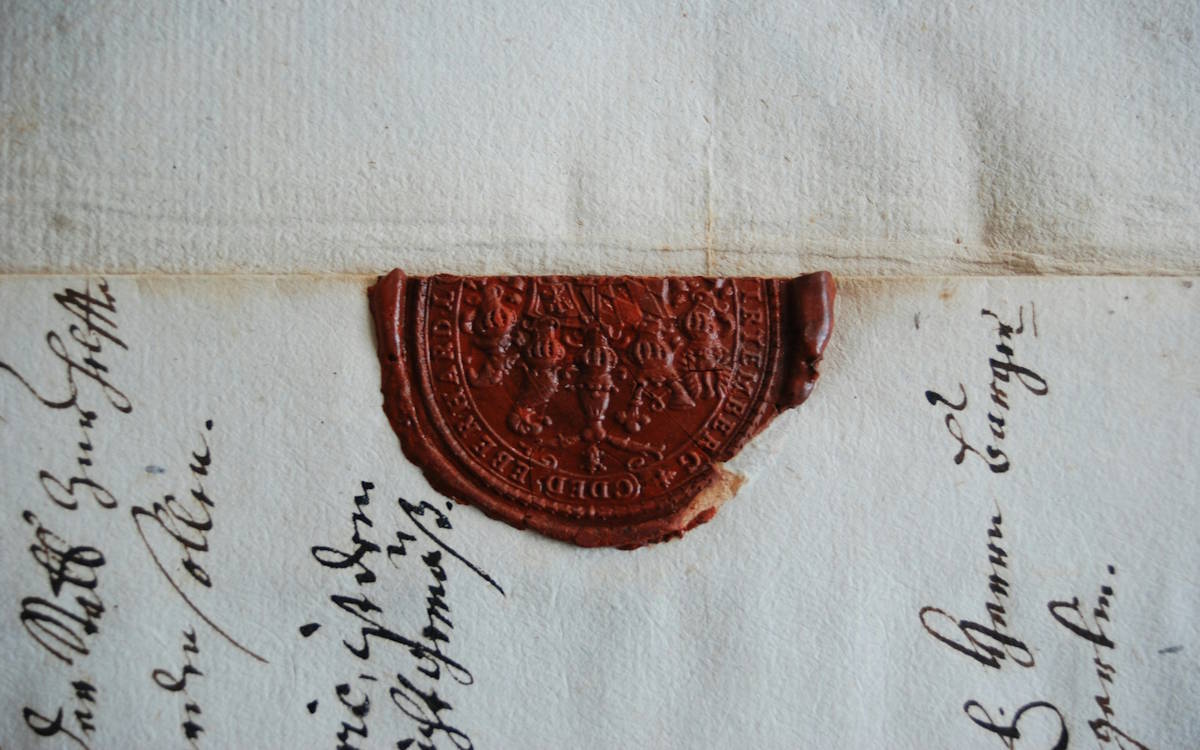
In bibliophilic and archival collections, provenance is closely linked to usage traces. Bookplates, stamps, dedications, or handwritten notes are integral parts of an object’s history.
These traces are not mere additions but central sources of provenance.
What Information Belongs to Provenance?
Provenance documentation can vary in scope, but some recurring elements include:
- date or period of acquisition
- method of acquisition (purchase, exchange, gift, find, inheritance)
- source of acquisition (person, dealer, institution, location)
- previous owners or collections
- accompanying documents or notes
Not all information needs to be complete. Even fragmentary details are valuable if accurately placed.
Provenance and Uncertainty
Many collectors hesitate to document provenance due to missing or uncertain information. Incomplete provenance is normal. Provenance is rarely complete.
Terms like presumably, probably, or not confirmed are legitimate and important. They clarify where knowledge ends and interpretation begins.
Provenance is not about proof but about transparent documentation.
Provenance and Context
Provenance explains the path of an object; context explains its significance. Both levels are complementary but not identical.
An object can have well-documented provenance but remain incomprehensible without context. Conversely, an object may be contextually well-embedded even with incomplete provenance.
It is useful for collections to consciously capture and link both levels.
Provenance in Private Collections
Provenance is often underestimated in private collections. Many assume it is relevant only for museums or the art market.
In fact, provenance is particularly important in private collections. It prevents knowledge loss, facilitates transfers, and preserves the internal coherence of the collection.
Private provenance is often more personal but no less valuable.
Digital Provenance
Digital systems have greatly expanded the possibilities of provenance documentation. Information can be structured, linked, and securely preserved over the long term.
At the same time, new challenges arise: digital dependencies, format changes, and long-term accessibility. Good digital provenance documentation is open, expandable, and not tied to short-term platforms.
Provenance, Ethics, and Responsibility
Provenance is not value-neutral. It touches ethical questions, especially regarding objects with problematic histories. Transparent provenance documentation is a sign of responsibility.
It allows problematic contexts to be visible rather than concealed.
Provenance and Estates
The importance of provenance becomes especially clear when collections are transferred, e.g., through inheritance. Without documented provenance, objects lose their context.
Good provenance documentation facilitates transfers and preserves knowledge across generations.
Provenance as a Narrative Structure
Provenance is not only a data structure but also a narrative. It connects facts into a readable story.
This narrative dimension makes provenance particularly valuable for public presentations and digital collections.
Conclusion: Provenance as the Foundation of Every Collection
Provenance is a central element of any collection. It links objects with time, place, and people, making collections understandable.
It does not need to be perfect but must be consciously recorded. Provenance protects knowledge, creates transparency, and enables long-term preservation.
Collectors.place views provenance not as an obligation but as an invitation to make the history of objects visible.