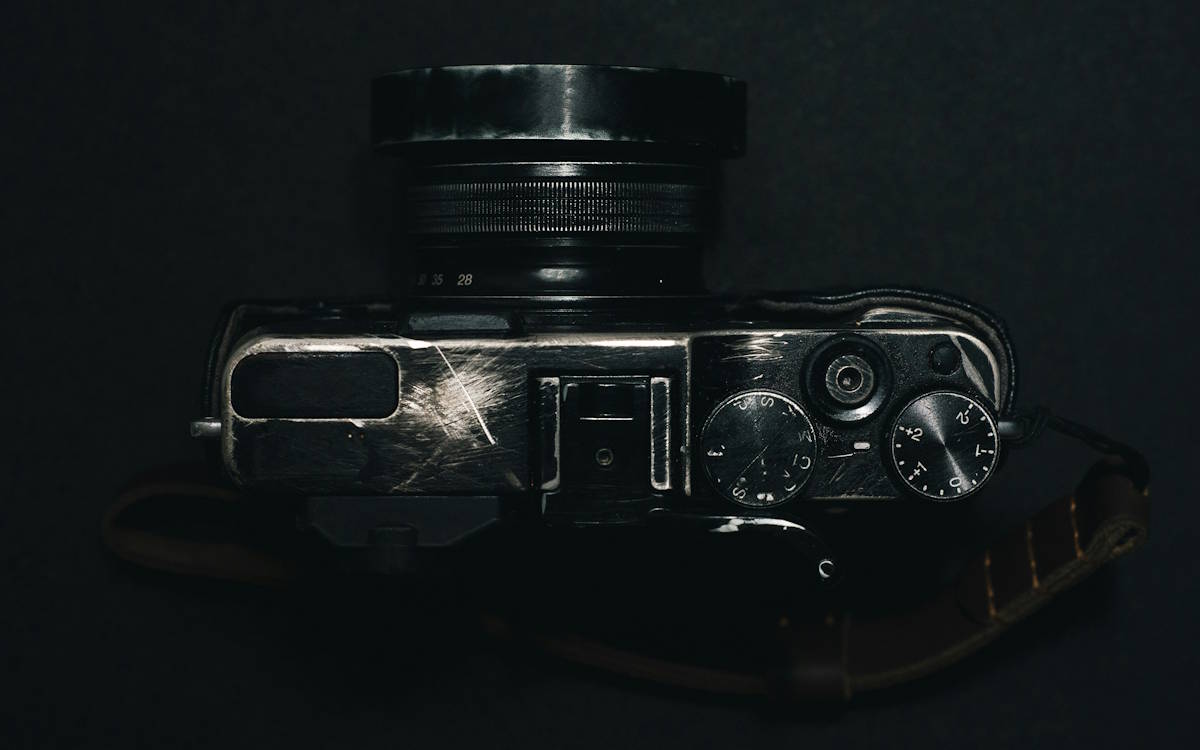
Photo: Alexander Andrews
Few factors influence a collectible's value as much as its condition — and few are documented as inconsistently. "Good condition," "light wear," "like new": phrases like these say more about the writer's expectations than about the object itself. This article shows how to document condition in a way that's traceable, comparable, and durable — regardless of the collecting field.
Why Vague Condition Statements Are a Problem
Condition isn't a fixed property of an object — it's an assessment, and assessments vary considerably between people, points in time, and collecting fields. What one collector calls "good" another considers "average." Without a fixed reference frame, every condition statement becomes subjective and, as a result, nearly useless to anyone else — buyers, heirs, insurers.
The problem compounds over time: a collector who catalogued an object as "flawless" a decade ago often no longer remembers the exact criteria behind that assessment. Without structured documentation, a condition rating loses its value the moment the context disappears.
Separate Observation From Assessment
The single most important principle for reliable condition documentation: observation and assessment belong in separate fields.
- Observation describes neutrally what's visible: "Fine scratch upper left, 3 mm, paint slightly chipped." This statement doesn't change — it's a historical fact.
- Assessment places that observation into a category: "Condition: good." This categorization can change — after a restoration, for instance, or as industry standards shift.
Mixing the two loses information: a later re-assessment often accidentally overwrites the original observation, even though that observation is exactly what matters for traceability.
Today's condition is an assessment. Today's description is a historical record.
A Simple, Transferable Grading Framework
Although most collecting fields have their own, often highly detailed condition scales (coin or comic grading, for example), a simple, universal baseline framework applies to almost any field:
- Mint / unused — no visible wear, original condition fully preserved.
- Excellent — minimal signs of use, visible only on close inspection, no functional or visual impairment.
- Good — visible but age-appropriate wear, no structural damage.
- Fair — noticeable wear, possibly minor repairs or missing minor parts.
- Poor / needs restoration — significant damage, missing parts, loss of substance.
What matters isn't the exact number of tiers, but consistently applying the same scale across the entire collection — that's the only way objects remain genuinely comparable to each other.
What Belongs in Good Condition Documentation
Beyond the basic category, it's worth structuring a few additional points:
- Date of assessment — condition is a point-in-time value, not a fixed attribute.
- Specific description of flaws — location, type, and extent of every impairment, ideally with measurements.
- Photographic documentation — especially close-ups of flaws, complementing the written description.
- Restoration history — every repair or conservation treatment, with date and who performed it.
- Reference standard — where an industry-standard condition scale exists (coins, comics, vinyl, for instance), it should be explicitly referenced rather than relying on your own, unclear phrasing.
Why This Diligence Pays Off Long-Term
Consistent condition documentation feeds into several of the practical questions collectors face sooner or later. When selling, it replaces trust-based negotiation with traceable facts. When insuring, it provides the basis for a realistic valuation. When passing a collection on to the next generation, it makes an object's condition legible even to someone who never saw it in its original state.
Conclusion
Condition isn't a snapshot that fits into a single word — it's a documented process. Anyone who cleanly separates observation from assessment, uses a consistent framework, and describes flaws specifically rather than vaguely creates a foundation that stays reliable across years and across changes in ownership. That reliability is exactly what separates a well-run collection from a merely well-intentioned one.

Market value, collector value, sentimental value, insurance value — for collections, "worth" is never a single number. Confusing these four dimensions leads to poor decisions around selling, insuring, or passing a collection on.

Not every collection outlives its collector. What decides whether a collectible makes the leap to the next generation — and what can collectors do themselves to make sure theirs doesn't end up gathering dust in the attic?