
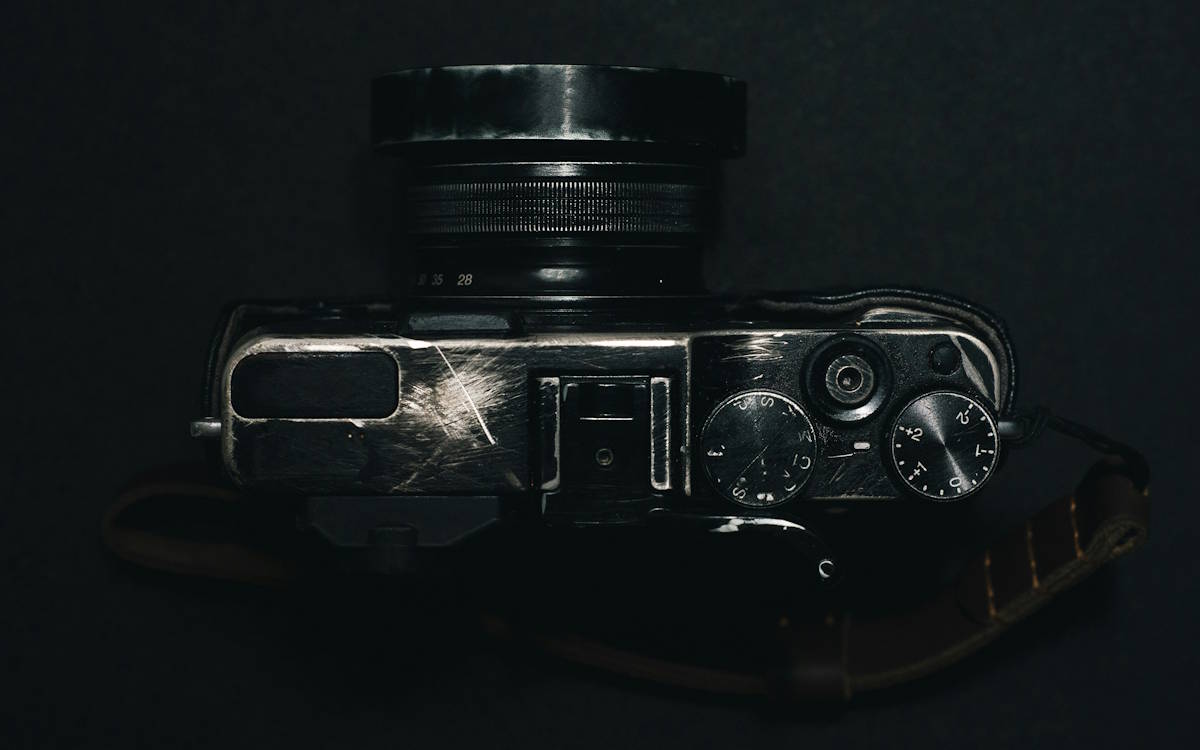
Photo: Vlad Deep
Many collectors assume their collection is adequately covered by an ordinary homeowner's or renter's policy. That's an expensive mistake: standard policies are designed for everyday household contents, not for collectibles with appreciation potential, one-of-a-kind character, or special damage risks. This article shows where the gaps lie — and how to actually insure a collection properly.
Why Standard Home Insurance Usually Falls Short
Home insurance policies are calibrated to the average replacement value of everyday items. For collectibles, this creates several typical coverage gaps:
- Blanket caps per item or category. Many policies limit reimbursement for valuables like coins, jewelry, or art to a fraction of the total insured sum — often well below the collection's actual value.
- No accounting for appreciation. Standard policies typically reimburse the replacement value at the time of loss based on the original calculation, not the value a collecting field may have gained in the meantime.
- Limited coverage outside the home. Objects traveling to exhibitions, fairs, or in transit are often not covered at all under a plain home policy.
- No connection to authenticity and provenance. In the event of a claim, insurers require proof of existence, condition, and value — but standard policies neither require nor support this kind of documentation.
What a Specialist Collector's Policy Actually Provides
Specialized collector's insurance (sometimes called "valuable items" or "fine art" policies) differs in several decisive ways:
- Agreed value instead of a flat reimbursement. Many specialist policies set the insured value in advance and pay out at that amount in the event of a loss — regardless of later market fluctuations.
- Worldwide or at least extended coverage. Transport, exhibitions, and temporary storage outside the home are routinely included.
- Specific risk coverage. Some policies cover additional risks, such as fading, material deterioration, or the loss of completeness within a series.
- Documentation requirements as an opportunity, not a hurdle. Specialist insurers usually require more detailed proof — but that requirement forces exactly the kind of documentation that's worthwhile anyway for a collection's long-term value.
A collection without a current insurance value is doubly at risk in the event of a loss: the material damage is compounded by the inability to prove it.
What's Needed for a Proper Insurance Valuation
Insuring a collection realistically takes more than a rough estimate:
- A complete inventory list — every object recorded individually, not lumped together as "collection."
- Photographic documentation — as proof of existence and condition at the time of insuring.
- Condition descriptions — traceable and recorded using a consistent framework.
- A solid valuation — ideally through independent appraisals or verifiable market comparisons, not pure self-assessment.
- Regular updates — value changes, new acquisitions, and condition changes should feed into the policy at reasonable intervals.
When a Specialist Policy Is Worth the Effort
Not every small collection needs its own dedicated insurance policy right away. As a rough guide: once a collection's total value exceeds the valuables cap of an existing home policy, individual pieces have significantly above-average value, or objects are regularly transported outside the home (exhibitions, fairs, trading among collectors), switching to specialized coverage is worth the effort.
Conclusion
Standard insurance isn't built for collections — it's a compromise that rarely does justice to actual value in the event of a loss. A specialized collector's policy demands more documentation up front, but in return offers exactly the kind of protection that matches a collection's real character: unique, appreciating, and often built up over years.
"Good condition," "light wear" - such phrases say more about expectations than about the object. How to document condition in a way that's traceable, comparable, and durable.

Becoming a collector overnight, with no prior knowledge and no preparation. Concrete first steps for anyone suddenly facing an inherited collection.