Photo: ShareGri
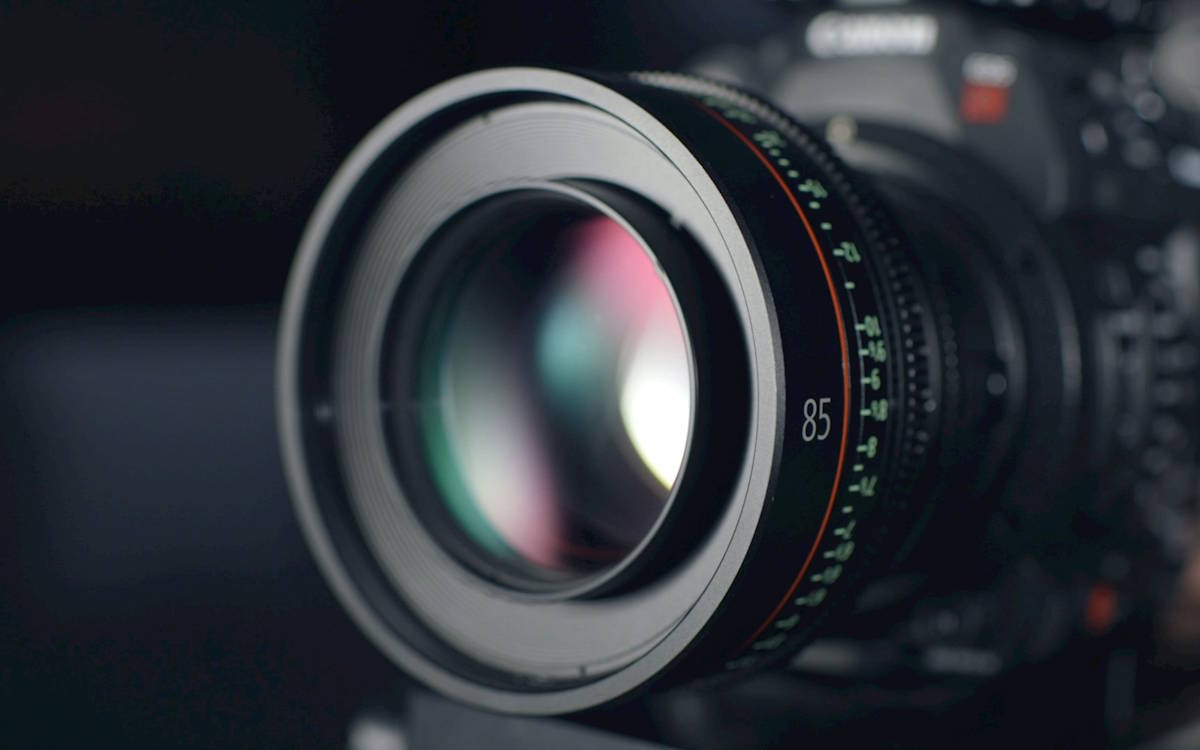
Stamps, trading cards, posters, comics, photographs, banknotes — flat collectibles are among the most frequently documented, yet technically most demanding objects to photograph. Unlike three-dimensional items, they forgive no crooked angles or uneven lighting: every blur, every reflection, every distortion becomes immediately visible. This article shows how to photograph flat objects systematically, with accurate color, and in a way that holds up as archival documentation.
Why Flat Objects Need Their Own Rules
With three-dimensional collectibles — minerals or figurines, for instance — shadow and perspective help reveal structure and depth. With flat objects, the opposite is required: any perspective distortion, any cast shadow, any reflection is disruptive, because it detracts from the actual goal — as faithful and distortion-free a reproduction of the surface as possible.
Getting Camera Position Right
The most important technical principle: the camera must be aligned exactly parallel to the object's plane. Even a slight deviation causes what's known as keyhole (trapezoidal) distortion — the object no longer looks rectangular, and its edges converge slightly. For reliably parallel alignment:
- A copy stand or reproduction stand that fixes the camera firmly above the object plane.
- A bubble-level app or the camera's built-in grid overlay, to check parallelism without extra equipment.
- A tripod with an adjustable center column, if no dedicated copy stand is available.
Light Without Reflection
Flat, often glossy surfaces — laminated cards, glossy photos, plastic sleeves — reflect light particularly easily. Two approaches have proven effective:
- Diffuse, indirect light instead of direct lighting. Two light sources at a 45-degree angle to the object plane, combined with diffusers (parchment paper, softboxes), significantly reduce harsh reflections.
- Polarizing filters, on both the light source and the lens, virtually eliminate reflections on glossy surfaces — especially relevant for sealed or laminated objects.
With flat objects, it's not the amount of light that matters most — it's the direction.
Ensuring Color Accuracy
For objects whose value depends heavily on subtle color nuances — stamps or first-edition comics, for example — color accuracy isn't an aesthetic concern; it's a documentary one.
- Include a gray card or a color calibration target in the first shot of a series, so later color corrections stay traceable.
- Use a consistent color temperature across all shots, rather than switching between daylight and artificial light.
- Shoot in RAW rather than compressed JPEG, if your camera supports it — this allows lossless color correction later.
Documenting Scale and Reference
An often-overlooked but important point: without a scale reference, an object's actual size can no longer be reconstructed from a photo alone. A ruler at the edge of the frame, a standardized reference object, or at minimum a measurement recorded in the filename or metadata prevents later ambiguity — especially for objects that may need reassessment down the line without the original in hand.
A Practical Workflow for a Consistent Series
- Align camera and object exactly parallel; keep the same position for every object in a given category.
- Set up diffuse, even light from two sources at a 45-degree angle.
- Photograph a gray card or color reference at the start of each session.
- Capture front, back, and — where relevant — detail shots of damage separately.
- Name files consistently and link them directly to the corresponding catalog entry.
Conclusion
Flat collectibles forgive fewer mistakes than three-dimensional objects, but they can be documented reliably with a few simple, repeatable rules: parallel alignment, low-reflection lighting, a consistent color reference, and an included scale. Once these ground rules are set up, they can be applied across the entire collection — producing photographic documentation that doesn't just look good, but holds up as an archive.
The practical guide to inventory numbers, data fields, photo documentation, and the right software for every collection.

Not every collection outlives its collector. What decides whether a collectible makes the leap to the next generation — and what can collectors do themselves to make sure theirs doesn't end up gathering dust in the attic?