
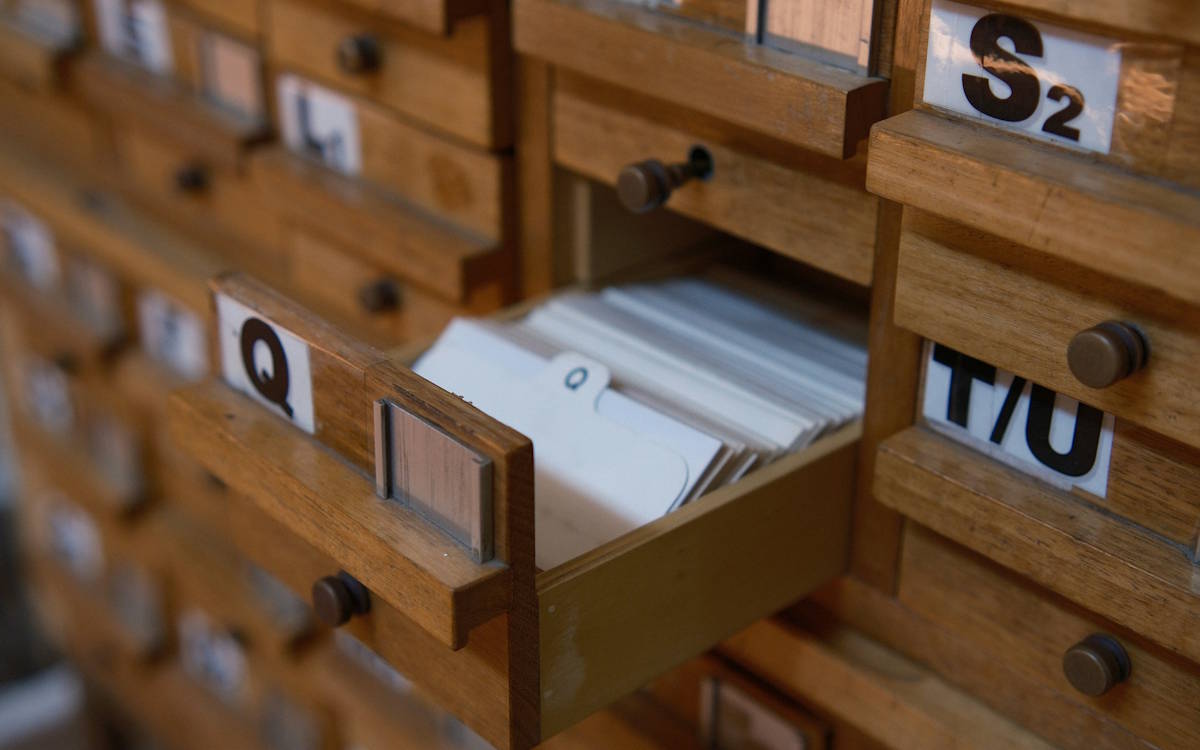
Photo: Wesley Tingey
Passing a collection on is almost automatically treated as the higher goal in collecting culture.
A collection is supposed to endure, move to the next generation, not simply disappear. But that reflex isn't always the right one. Some collections are better served by being dissolved — deliberately, in an orderly way, with appreciation rather than guilt. This article tackles an uncomfortable but important question: when is dissolution the more honest decision than passing something on at all costs?
The Quiet Pressure to Preserve Everything
Anyone who has built a collection over years or decades often carries a diffuse sense of responsibility with it: these objects were assembled with care, time, and sometimes considerable money — dissolving them "just like that" feels like devaluing the effort invested. That pressure is often passed on to heirs, frequently unspoken: the collection should stay, simply because it's always been there.
The problem: this pressure rarely serves the collection's own interest. A collection taken over out of obligation but not genuinely wanted often deteriorates quietly — stored incorrectly, not maintained, eventually dissolved anyway, just later, under worse conditions, without the care a deliberate decision would have allowed.
When Dissolution Is the Better Option
Several recurring situations make a deliberate dissolution clearly preferable to an unwanted handover.
No genuine interest among heirs. When the next generation openly says, or makes clear, that they have no connection to the collecting field, that's not a disappointment — it's an honest starting point. A collection nobody maintains, understands, or appreciates doesn't just lose material value — it loses its sentimental value too, becoming a burden rather than an inheritance.
The collecting field itself has run its course. Some collecting fields lose their cultural context entirely — the market shrinks, the community dissolves, expertise disappears. In such cases, a late dissolution can be more difficult and less advantageous than an early, planned one.
The collection has outgrown the collector's life situation. Not every collection fits every life stage. A move, changed living arrangements, health limitations, or simply new priorities can mean a collection has objectively become too large, too demanding to maintain, or too costly to continue responsibly.
Fragmentation is more likely than preservation. When there are multiple heirs and no agreement on how to handle the collection, it often gets torn apart anyway — just uncontrolled, in conflict, instead of orderly and fairly divided.
A collection nobody wants anymore doesn't become more valuable simply by being preserved anyway.
Dissolution Isn't the Same as Loss
The key misconception is often equating dissolution with failure. In reality, a well-planned dissolution can have several positive effects that a forced handover doesn't offer:
- Objects find new, engaged owners. A piece gathering dust in an unwanted collection can find exactly the appreciation it deserves with a different collector.
- Collector value is preserved instead of decaying. Significant pieces that end up in the wrong hands or are stored improperly often lose more substance than they would in a controlled sale to informed buyers.
- Financial value is realized instead of sitting idle. A collection nobody maintains ties up capital without generating benefit — a sale during one's lifetime, or as part of an orderly estate plan, can actually make that value available.
- Emotional burden is lifted from heirs. A clear decision made during the collector's lifetime spares the family later conflicts over what should happen to the collection.
How a Deliberate Dissolution Succeeds
Dissolution doesn't mean carelessly scattering a collection. A careful dissolution differs from a chaotic one precisely in that it's planned, documented, and handled with respect.
- Take inventory before deciding. Only complete documentation — condition, provenance, value — provides the basis for an informed decision about what to keep, sell, or donate.
- Consider selective rather than complete dissolution. Often the entire collection doesn't need to go — particularly significant individual pieces can be deliberately kept back or passed on to interested individuals, while the rest is sold.
- Choose the right sales channel. Specialist dealers, dedicated auction houses, or club networks reach informed buyers who can actually assess the value of a collecting field — unlike a blanket flea-market sale.
- Consider institutions as an option. For collections of real scholarly or historical significance, donating or selling to museums, archives, or specialist associations can preserve the sentimental and cultural value, even without a private handover.
- Document the story, even as the objects leave. Photos, notes, and the personal collecting history can be preserved regardless of whether the physical objects stay in the family.
Conclusion
Not every collection has to endure across generations to count as a success. A deliberate, well-planned dissolution is often the more respectful decision — for the objects themselves, which are better off with engaged new owners, and for the heirs, who aren't left carrying an unwanted responsibility. The measure of success shouldn't be whether a collection is preserved, but whether it's handled responsibly — whether through passing it on or through dissolving it.

Not every collection outlives its collector. What decides whether a collectible makes the leap to the next generation — and what can collectors do themselves to make sure theirs doesn't end up gathering dust in the attic?

Market value, collector value, sentimental value, insurance value — for collections, "worth" is never a single number. Confusing these four dimensions leads to poor decisions around selling, insuring, or passing a collection on.
The practical guide to inventory numbers, data fields, photo documentation, and the right software for every collection.